
Agriculture Technology Comparison
Quick Intro
In this section I chose to look into the various technologies being used to grow the food for the continually growing population. This led me to learn about hydroponics, aeroponics and aquaponics. Each of these methods of agriculture are far from the typical soil farms we are used to today. Each having specific caveats which can make them better or worse than other methods. Below is a comparison of hydroponics, aeroponics and aquaponics. Each one telling you a bit about what the methods are and the pros and cons compared to one another. Further down on this page you will see a section about some of the cutting edge technology that is being used on a large scale.


What is Hydroponics ?
Growing in water instead of dirt. Adding nutrients to the water and pumping air to the roots via something like an airstone and pump.
When Compared to a Traditional soil grow
Pros:
-Less Water used
-Plants grow faster
-Nutrients can be uptaken faster and potential for more control
Cons:
-Uses Electricity
-Initial cost is higher than traditional soil grow
-Separate Nutrients must be applied
-Basic Knowledge of Hydroponics needed
-Potential algae,(A fast growing aquatic plant), formation can occur in water and negatively affect the plant

What is Aeroponics ?
Similar to a hydroponic grow but instead of growing in water you are growing in the air. A mister or fogger is used to bring nutrients and water to the roots of the plant.
When Compared to a Hydroponic grow
Pros:
-Less Water is used
-Roots get more oxygen
-Increased oxygen leads to more respiration which could potentially lead to faster growth
-Uses less nutrient and is more efficient at uptaking them
Cons:
-Specific Aeroponic knowledge
-More expensive initial cost
-Knowledge of more complex systems to maintain
What is Aquaponics ?


Similar to Hydroponics the grow medium is water but instead of adding nutrients, there is another tank connected in the system with fish. These fish eat and add Ammonia. Then beneficial bacteria convert its nitrites and then converted into nitrates which is then pumped into a hydroponic system.
When Compared to a Hydroponic grow
Pros:
-Considered Organic
-Natural Nutrients used
-Essentially only food for the fish must be added
Cons:
-Advanced knowledge of maintain fish fish
-Advanced knowledge of maintaining the Aquaponics systems
Advanced knowledge of maintaining a healthy amount of beneficial bacteria
-Initial cost is high
-Uses more electricity
Cutting Edge Agricultural Tech
Vertical Farming
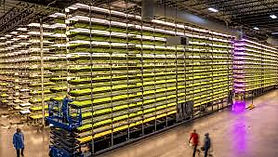
Vertical farming is the idea that growing plants in a stacked vertical system. This greatly increases the production of agricultural for the same square footage or space used. Vertical farms use the methods of hydroponics and aquaponics. This allows them to use less water, less nutrients and put these farms closer to consumers. The combination of these benefits allows vertical farms to have a smaller carbon footprint than traditional agriculture. Some negatives include overall start up costs can be expensive and many vertical farms requires the use of LED grow lights meaning large amount of electrical energy is used.

Drones are being used in agriculture in many ways and in the netherlands a team of innovators are creating an artifilal predator to help eliminate pests.